Amazigh culture in Morocco is not a museum exhibit: it is the living language, food, crafts and hospitality of millions of people, especially in the Atlas Mountains. If you visit the Ourika Valley, you are visiting Amazigh country. Understanding a few basics will make your trip far richer.
This guide explains who the Amazigh are, what makes their culture distinct, and how to experience it respectfully.
Who are the Amazigh people?
The Amazigh (plural Imazighen) are the indigenous peoples of North Africa, often called "Berbers" in English and French. The word Amazigh is usually translated as "free person". In Morocco, Amazigh communities live across the Rif, the Middle Atlas, the High Atlas and the Anti-Atlas, as well as in the cities. A good overview is available on Wikipedia's Berbers article.
- Languages: Tarifit (north), Central Atlas Tamazight (Middle Atlas) and Tashelhit (High Atlas, Anti-Atlas, Souss). In the Ourika Valley, people speak Tashelhit.
- Official status: Amazigh (Tamazight) became an official language of Morocco in the 2011 constitution, alongside Arabic.
- Script: Tifinagh, the alphabet you see on road signs and public buildings.
- New Year: Yennayer, celebrated in mid-January, has been an official public holiday in Morocco since 2024.
What makes Amazigh culture distinct?
Hospitality and tea
In an Amazigh home, a guest is first offered mint tea, bread, olive oil and often amlou (almond, argan oil and honey spread). Refusing everything is impolite; accepting a glass is enough. Read more in our French guide to Moroccan mint tea.
Food
Amazigh cooking is seasonal and rooted in what the land gives: barley and wheat, olives, walnuts, vegetables, eggs and, for celebrations, meat. Tajine, couscous, tagoula (barley porridge) and flatbreads baked in clay ovens are staples. Our Berber tajine recipe shows the village method.
Crafts
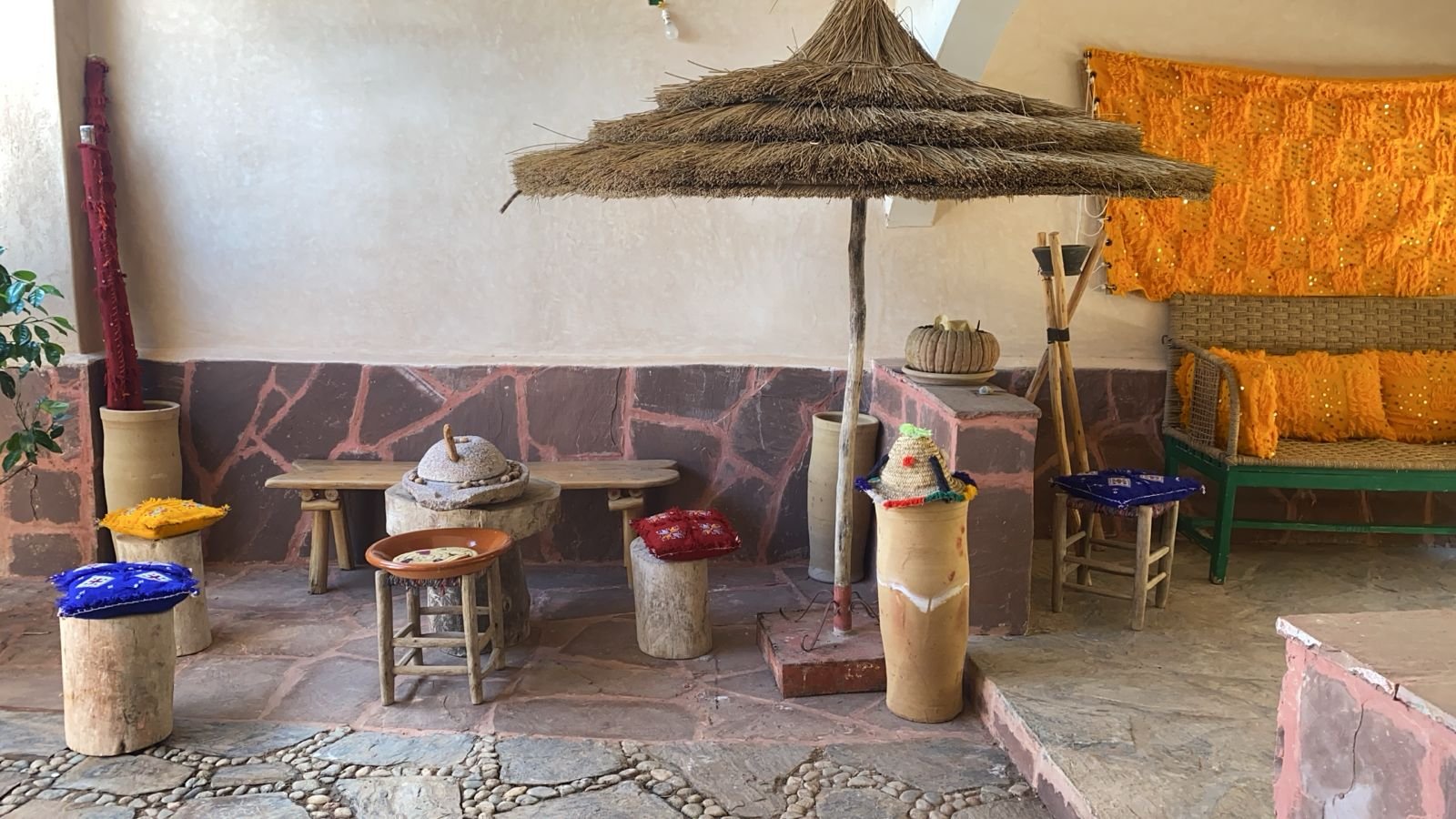
Weaving, pottery, jewellery, carpets and raffia work carry symbols passed down through generations, mostly by women. Each region has its patterns.
Architecture
Villages (douars) are built in rammed earth (pisé) and stone, with flat roofs used for drying crops. Larger fortified houses are called kasbahs, and collective granaries are called agadirs.
Music and gatherings
Ahwach, a collective dance and song of the High Atlas, is performed at weddings and festivals, with frame drums and call-and-response singing.
Key Amazigh words for travellers
| Tashelhit (approx. pronunciation) | Meaning | When to use |
|---|---|---|
| Azul | Hello | Greeting anyone |
| Tanmirt | Thank you | After tea, a meal, help |
| Iyyeh / Uhu | Yes / No | Everyday conversation |
| Atay | Tea | Shared in every home |
| Aghrum | Bread | At the table |
Spellings and pronunciations vary by region; locals will appreciate the effort either way.
How to experience Amazigh culture respectfully
- Choose experiences run by local people or cooperatives, so income stays in the village.
- Dress modestly: covered shoulders and knees.
- Ask before taking photos, and accept a "no" with a smile.
- Learn two or three words of Tashelhit.
- Eat with your right hand when sharing a dish, and accept tea.
- Buy crafts directly from the makers rather than from intermediaries.
Where to experience Amazigh culture near Marrakech
The High Atlas valleys closest to Marrakech, Ourika, Imlil and Asni, are all Amazigh heartlands. In the Ourika Valley, our cooperative offers:
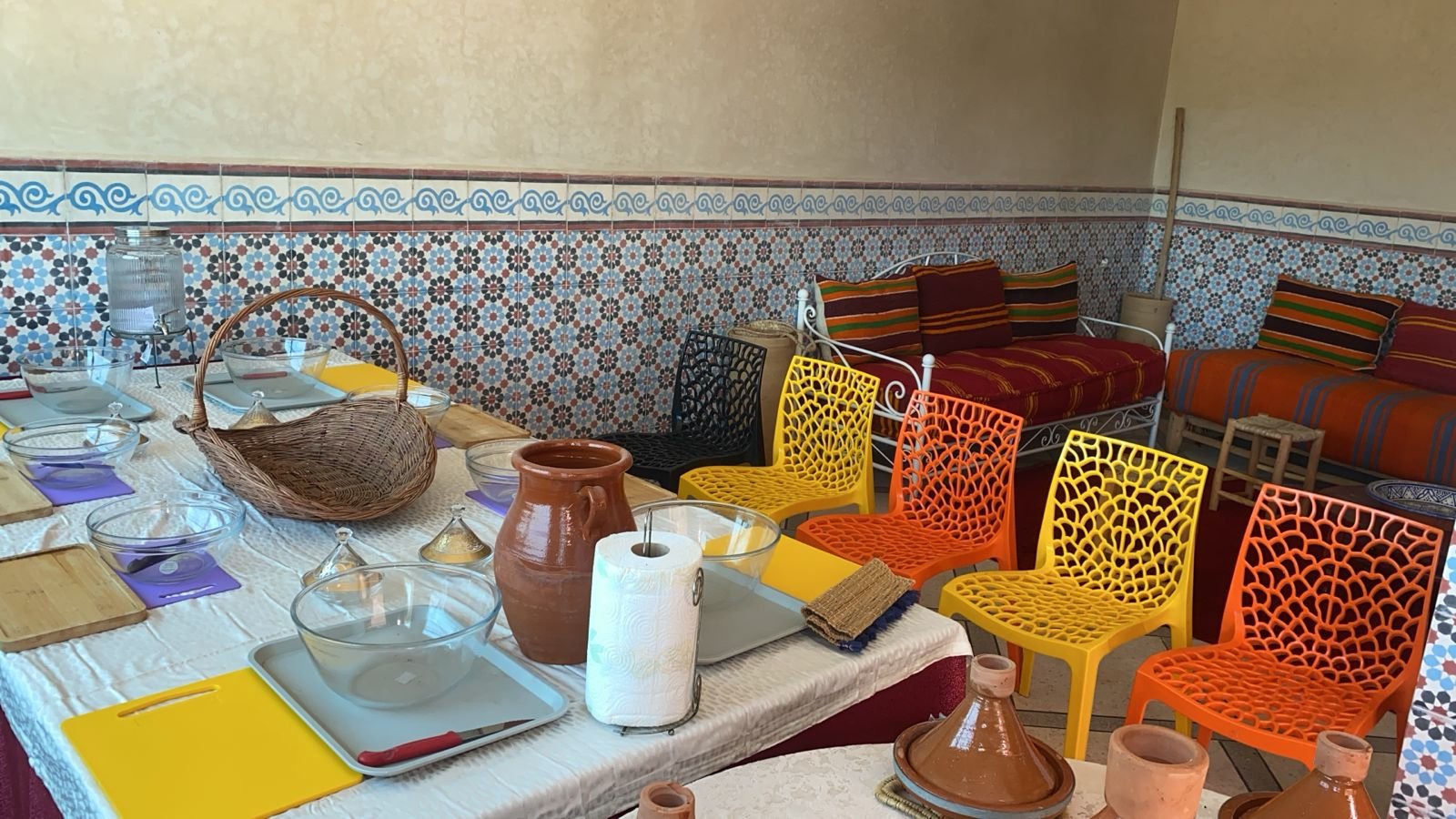
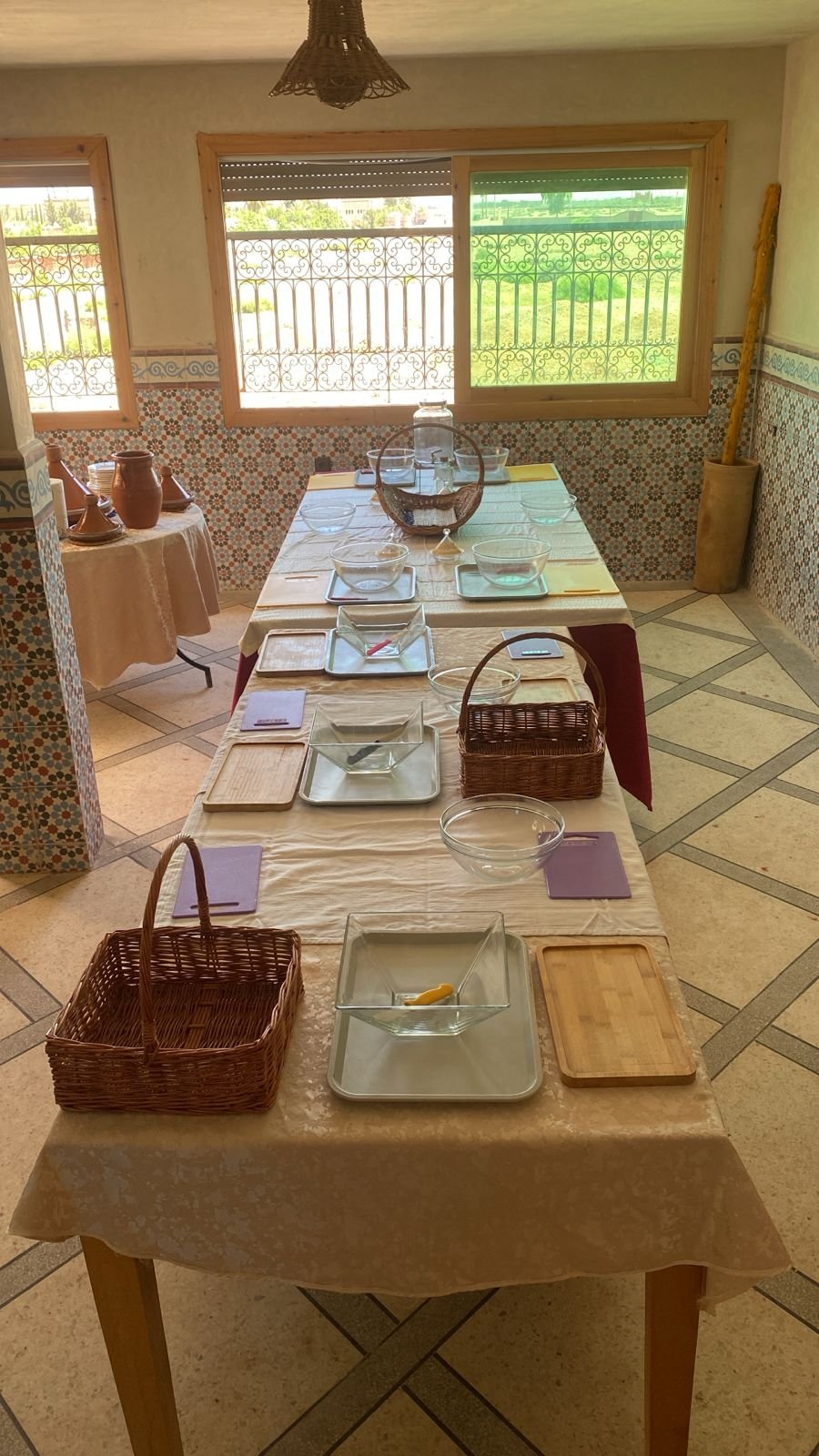
- The half-day Amazigh cooking class and raffia workshop, with optional photos in traditional dress and henna on request.
- The CAMR experiences with the women of the douar, Monday to Friday.
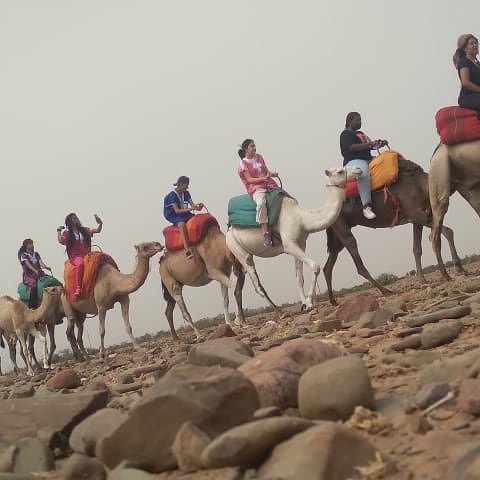
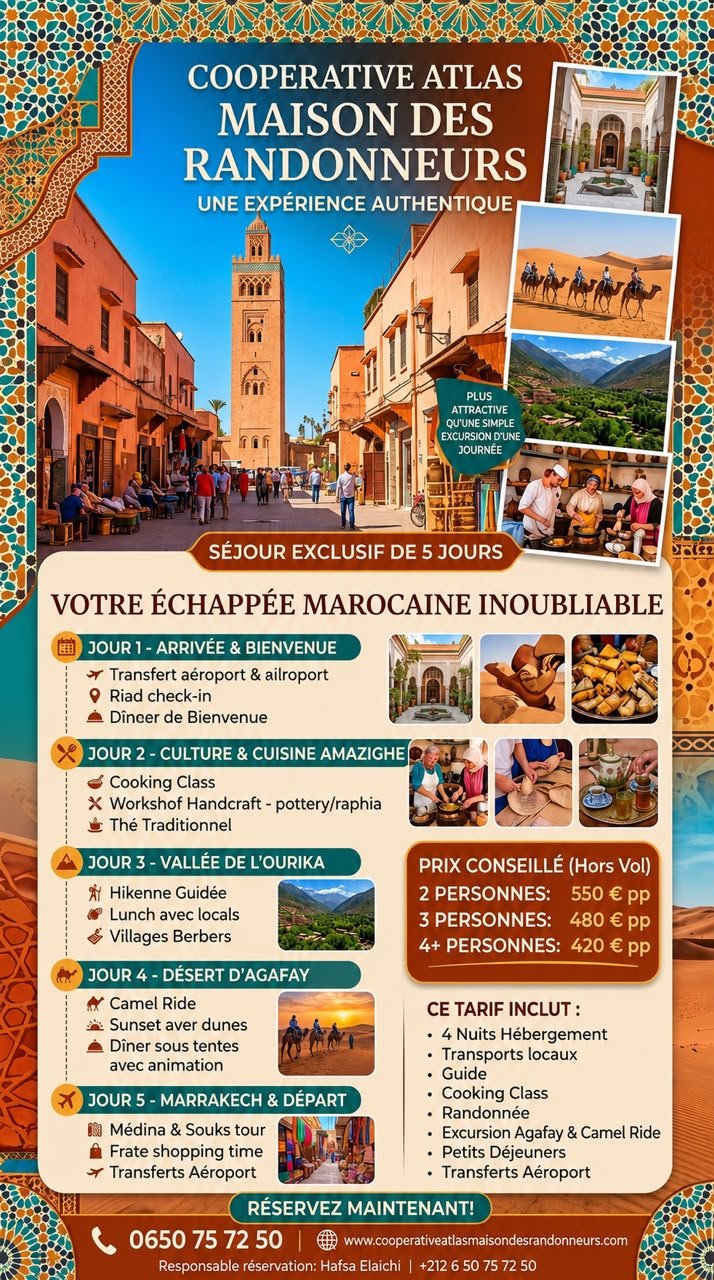
- The 5 days / 4 nights Amazigh experience from Marrakech, combining cooking, crafts, a hike in the Ourika Valley, the Agafay desert and the medina.
Not sure which valley to choose? Compare them in our Imlil vs Ourika Valley guide.
The role of women in Amazigh village life
In the douars of the High Atlas, women carry much of the cultural knowledge. They prepare the bread, manage the household food stores, weave, embroider and pass recipes and patterns to their daughters. Traditional tattoos on the chin and forehead, seen today mostly on older women, once marked identity and belonging. Henna is still used for weddings and celebrations, with designs that vary from region to region.
Many women in rural areas now organise themselves into cooperatives to sell their products, from argan oil and couscous to crafts, and to welcome visitors. This gives them an income of their own and keeps traditional skills alive. Our cooperative works in the same spirit: the cooking classes and workshops are led by the women of the douar, and each booking directly supports them and their families.
Amazigh symbols you will notice
Once you know where to look, Amazigh culture is visible everywhere in Morocco:
- The Yaz (ⵣ): the Tifinagh letter that symbolises the "free person", found on flags, jewellery and graffiti.
- Geometric patterns: diamonds, zigzags and crosses on carpets, pottery and doors, each with meanings tied to fertility, protection or nature.
- Silver jewellery: fibulas (brooches), heavy bracelets and the hand-shaped khamsa against the evil eye.
- Earthen villages: ochre and red houses built from the very soil of the mountain, which blend into the landscape.
Asking about these symbols is a great conversation starter with your hosts, who are usually proud to explain their meaning.
Amazigh culture through the calendar
The rhythm of village life follows the seasons. Spring brings ploughing and the first vegetables; summer is the time of weddings, festivals and moussems such as the one at Setti Fatma; autumn is the season of walnuts, apples and olives; winter is quieter, spent around the fire with tea, bread and stories. Visiting at different times of year shows you different sides of the culture. Whatever the season, the welcome stays the same: tea first, conversation second, and plenty of bread.
Ask your hosts what is happening in the village during your stay. A harvest, a market day or a family celebration can become the most memorable part of your trip, and our team is always happy to explain the traditions behind what you see.
One last tip: Amazigh hospitality is generous, but it works both ways. Arriving with a small gift such as sugar, tea or fruit when invited into a home is a lovely gesture, and a sincere "tanmirt" when you leave is always remembered.
Key takeaways
- Amazigh people are North Africa's indigenous peoples; "Berber" is the older outside name.
- Tamazight is official in Morocco since 2011 and written in Tifinagh.
- Hospitality, seasonal food, women's crafts and collective music are central.
- The best way to experience it is with local hosts, in their village.
Learn more about our cooperative or contact us to plan your visit.