A real Berber tajine recipe is simpler than most cookbooks suggest: a clay pot, a handful of vegetables, a few spices, olive oil and time. What makes the difference is the order in which you layer the ingredients and the patience of a slow fire. This is the way the women of our douar in the Ourika Valley prepare it.
Below you will find the ingredients, the step-by-step method, variations and the mistakes to avoid.
What is a Berber tajine?
A tajine (also spelled tagine) is both a conical earthenware pot and the slow-cooked stew made inside it. The cone traps steam, which condenses and falls back on the food, so the dish cooks in its own juices with very little water. In Amazigh villages of the High Atlas, the "Berber tajine" usually means a generous vegetable tajine, often with a little meat, arranged in a pyramid and cooked over charcoal. You can read about its history on Wikipedia's tajine page.
Ingredients for a Berber tajine (4 people)
- 500-700 g of beef, lamb or chicken on the bone (optional for a vegetarian version)
- 2 onions, sliced into rings
- 2-3 tomatoes, sliced
- 3 carrots, cut lengthwise
- 2 potatoes, cut into wedges
- 2 courgettes (zucchini), cut lengthwise
- 1 green pepper, in strips
- A handful of green olives and 1 preserved lemon (optional)
- A bunch of fresh coriander and parsley, tied together
- 4-5 tablespoons of olive oil
- Spices: 1 tsp ground ginger, 1 tsp sweet paprika, 1 tsp cumin, 1/2 tsp turmeric, salt and pepper
- 1 small glass of water
How to make a Berber tajine: step by step
- Prepare the base. Pour the olive oil into the tajine base and cover the bottom with the onion rings. This bed protects the food from burning.
- Season the meat. Rub the meat with half of the spices, salt and a little oil, then place it in the centre on the onions.
- Build the pyramid. Stand the carrots, potatoes and courgettes upright around the meat, like the walls of a tent, then add the pepper strips.
- Top with tomato. Lay the tomato slices over the top, sprinkle the rest of the spices, and place the herb bunch on the summit.
- Add a little water. Pour a small glass of water around the edge, never on top.
- Cook slowly. Put the lid on and cook over low heat (charcoal, gas with a diffuser, or a low oven) for 1h30 to 2h30 depending on the meat.
- Finish. Add olives and preserved lemon in the last 15 minutes. Serve in the pot with fresh bread.
Cooking times by type of tajine
| Version | Approx. cooking time | Typical additions |
|---|---|---|
| Vegetable tajine | 45-60 min | Peas, pumpkin, sweet potato in season |
| Chicken with preserved lemon | 1h-1h15 | Olives, saffron, ginger |
| Beef with vegetables | 2h-2h30 | Carrots, potatoes, courgettes |
| Lamb with prunes and almonds | 2h-2h30 | Cinnamon, honey, sesame seeds |
| Kefta (meatball) with eggs | 30-40 min | Tomato sauce, cumin, eggs at the end |
Which tajine pot should you use?
There are two kinds of tajine pots. Glazed and painted tajines sold in souvenir shops are often decorative; some glazes are not suitable for cooking. For cooking, choose a simple, unglazed or lightly glazed clay tajine sold for daily use, the kind you see in local markets such as the Monday souk of Tnine Ourika. Before first use, soak it in water for a few hours and let it dry. Always heat it gradually and avoid putting a cold pot on a high flame, or it may crack.
No tajine pot at home? A heavy cast-iron casserole with a tight lid works well. Keep the heat low and the water minimal.
Common mistakes to avoid
- Too much water: a tajine is not a soup. The vegetables release their own juice.
- Too high heat: the bottom burns before the top is cooked. Low and slow is the rule.
- Lifting the lid too often: you lose the steam that does the cooking.
- Cutting vegetables too small: they turn to mush. Long pieces hold their shape.
- Skipping the onion bed: it is what protects and flavours the dish.
How is a tajine eaten in an Amazigh home?
The tajine is placed in the middle of a low round table, and everyone eats from the same dish with pieces of bread, using the right hand. Each person eats from the section in front of them; the host often pushes the best pieces of meat toward the guests. Water is shared, and the meal finishes with fruit and mint tea. Learn the tea ritual in our French guide to Moroccan mint tea.
Learn the Berber tajine recipe in the Ourika Valley
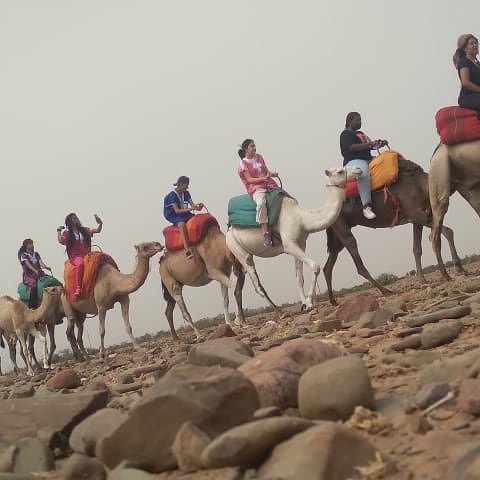
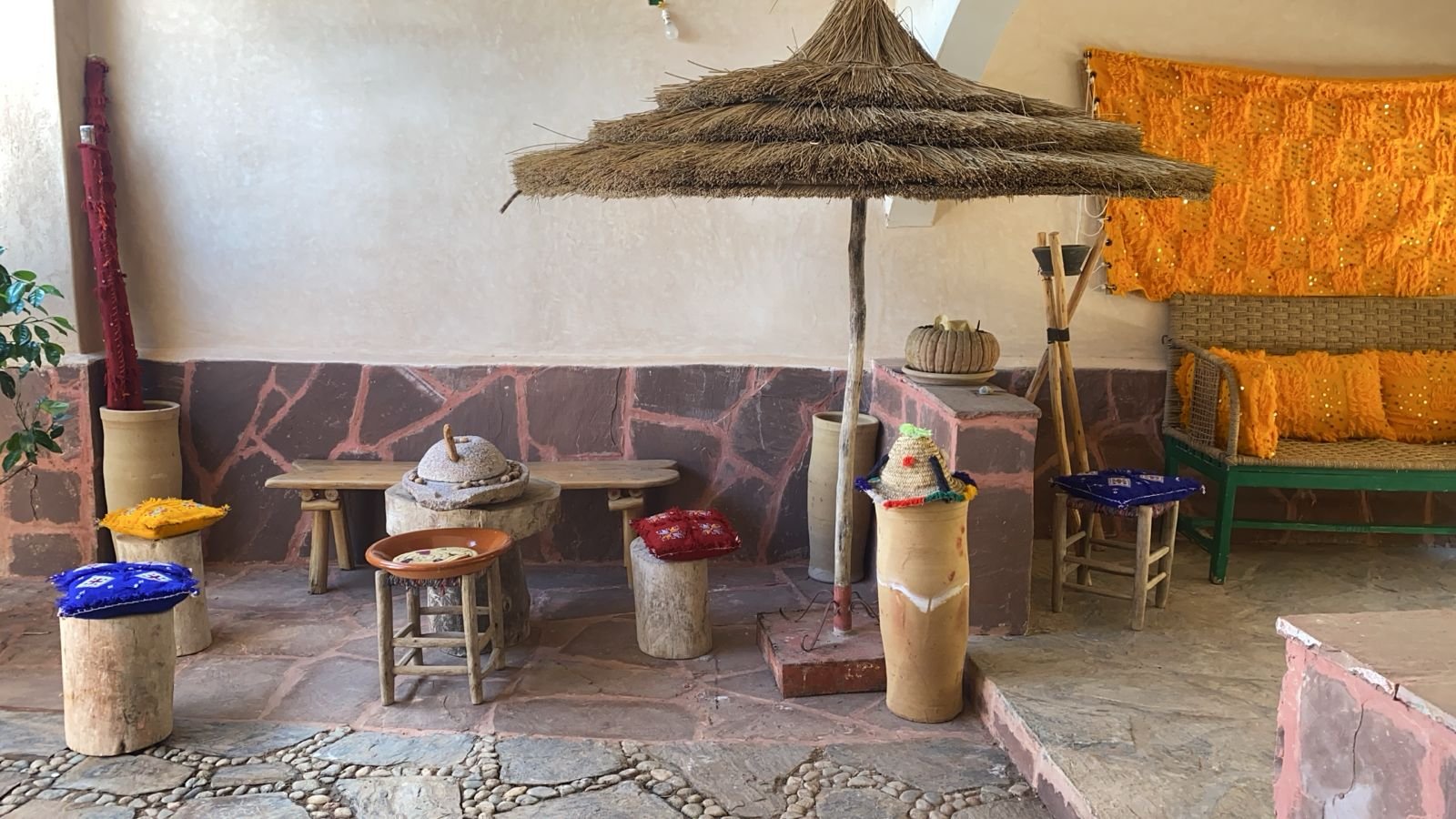
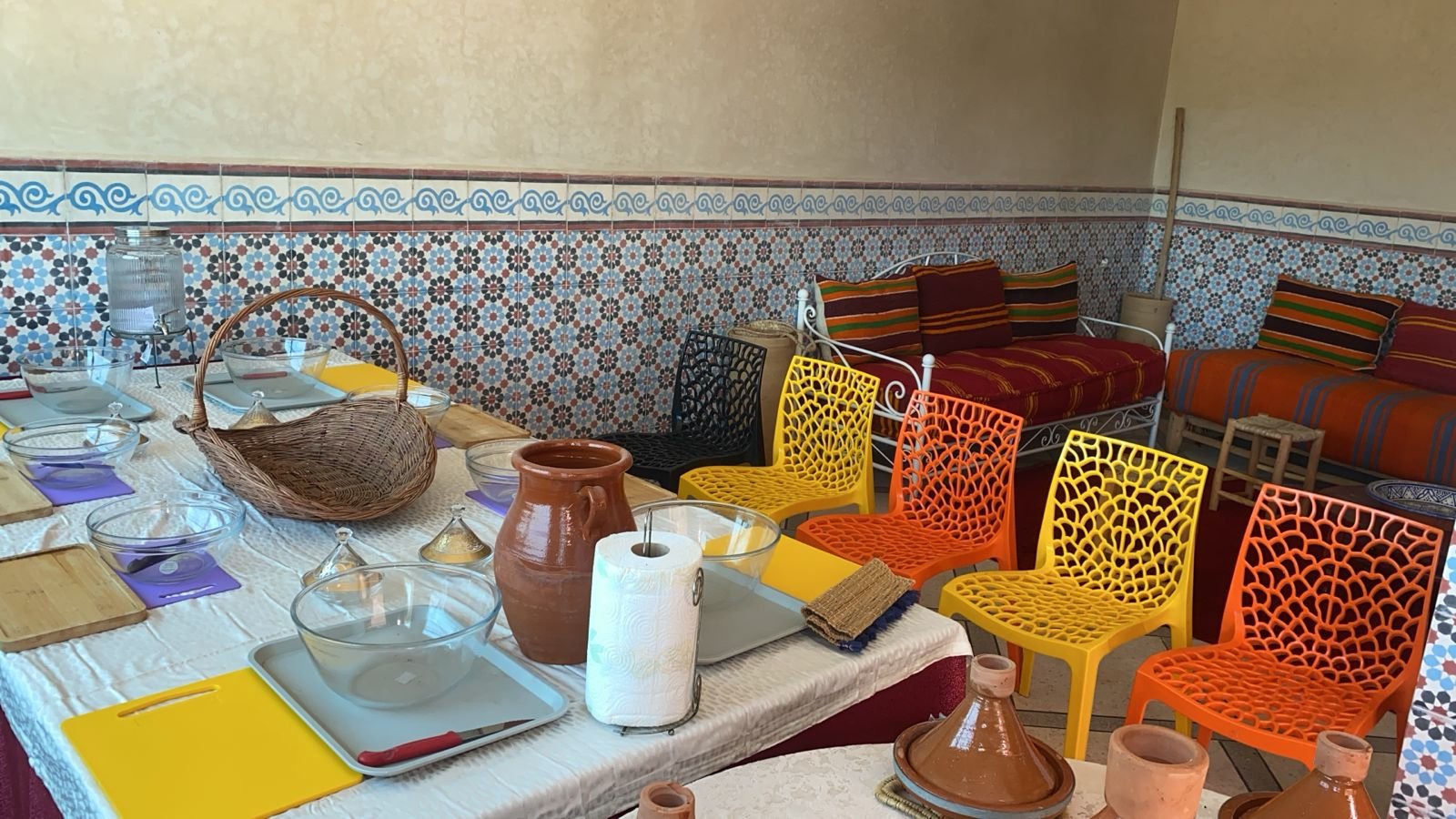
Reading a recipe is good; making it with the women who have cooked it all their lives is better. In our authentic Moroccan cooking class with the women of the douar, you discover local ingredients, build your own tajine and eat it for lunch. The half-day Ourika cooking and raffia workshop includes transport from Marrakech, mint tea, lunch, a craft workshop and a camel ride. For a deeper stay, the 5-day Amazigh experience includes a full cooking day. You can also compare options in our French guide to cooking classes in Marrakech.
Seasonal variations of the Berber tajine
In a village, nobody follows a fixed recipe: the tajine follows the garden. In spring, fresh peas, broad beans and artichokes appear in the pot. Summer brings tomatoes, peppers, courgettes and aubergines in abundance. In autumn, pumpkin and sweet potato add a natural sweetness, often balanced with a pinch of cinnamon. In winter, root vegetables, turnips and dried pulses take over, and the tajine becomes richer and more warming.
Meat is used sparingly in everyday cooking and more generously for guests and celebrations. A small piece of lamb or beef flavours the whole dish; the vegetables are the real stars. Eggs are another common addition: cracked on top of a kefta or vegetable tajine in the last minutes, they cook gently in the steam.
What to serve with a tajine
- Bread: round flatbreads baked in a clay oven or on a griddle are essential. In the douar, bread is the cutlery.
- Cooked salads: zaalouk (smoky aubergine and tomato) and taktouka (peppers and tomato) are served before the tajine.
- Fresh salad: diced tomato, onion and cucumber with cumin and olive oil.
- Fruit: seasonal oranges, melon or pomegranate to finish.
- Mint tea: always, at the end of the meal and often at the start.
Water is the usual drink with the meal. Tea comes afterwards, served by the host, while the conversation continues.
A note on olive oil and smen
Good olive oil is the soul of a village tajine. In the High Atlas, many families use oil from their own trees or from neighbours, pressed locally. Some recipes also include a spoon of smen, a traditional aged clarified butter with a strong, cheesy flavour. It is an acquired taste, so ask your hosts to let you try it on bread first.
Key takeaways
- A Berber tajine is a slow-cooked stew made in a conical clay pot.
- Layer onions first, meat in the centre, vegetables standing around it.
- Use little water, low heat and keep the lid on.
- Vegetable tajines take under an hour; beef and lamb up to 2h30.
- Eat it together, from the pot, with bread.
Want to cook with us? Contact our team on WhatsApp at +212 650 75 72 50.